Case notes get typed up after the fact, from memory — instead of while they could still shape what happens next. Outcomes get tracked in whatever spreadsheet is on hand, or not tracked at all, so nobody notices when someone's sliding backwards until months later.
It's not a discipline problem. It's a structure problem — and it's one that gets worse every year demand rises and budgets don't.
Every team we talk to describes the same thing: weeks spent pulling reports together from clunky, disconnected systems — board reports, team updates, government reporting, the same scramble for every audience who needs one. Time that could have gone to another person, another check-in, another problem caught early.
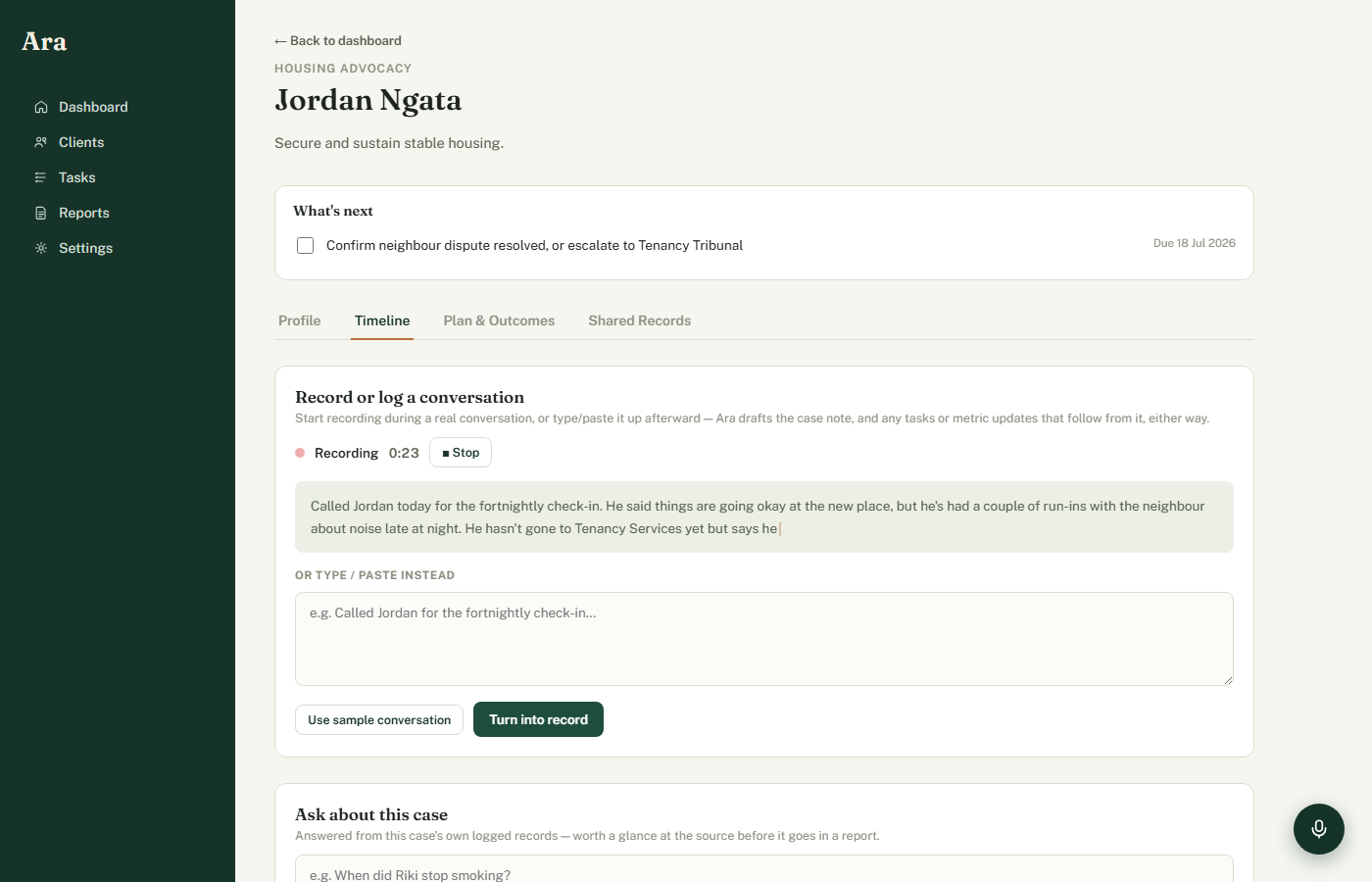
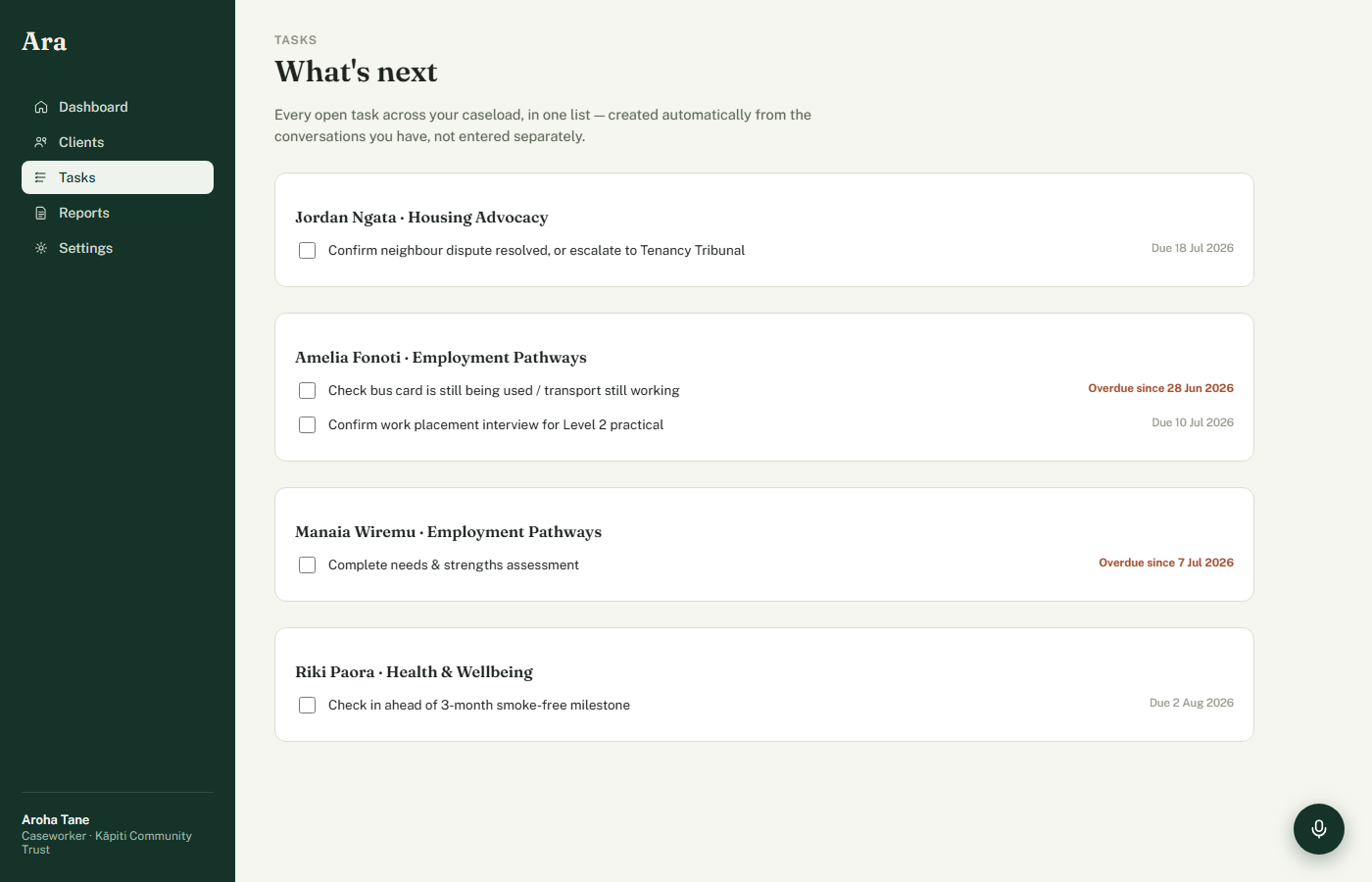
A caseworker has a conversation. Ara turns it into a case note — and drafts the tasks and metric updates that follow from it — ready for a quick review, not a rewrite.
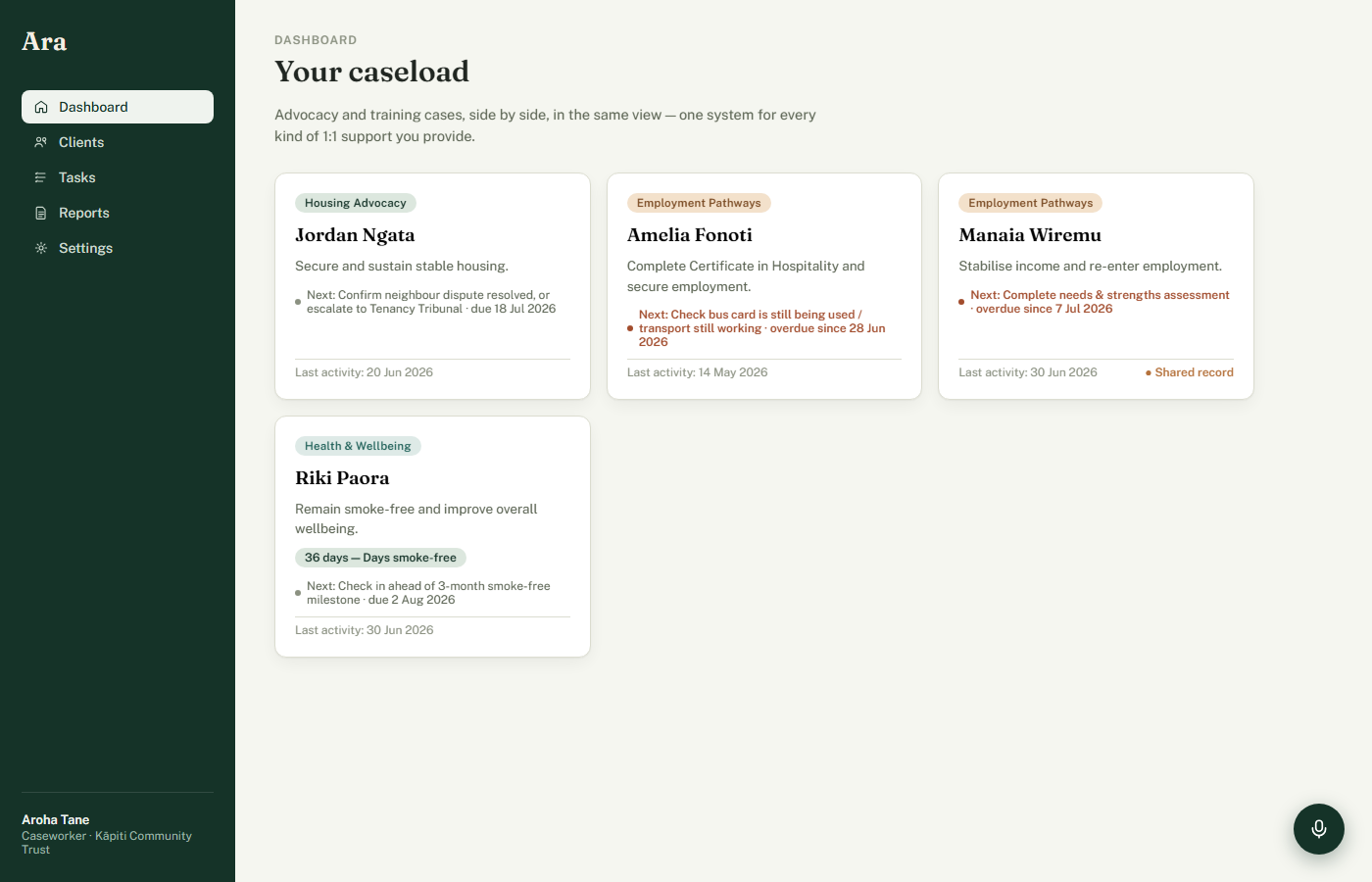
Housing advocacy, employment support, wellbeing check-ins — whatever support you offer, it lives in the same connected system underneath.
If someone's been supported elsewhere, that history can travel with them to a new provider — only what they choose to share, only with their say-so.
The same information becomes a funder-ready report in whatever format they need — more on that just below.
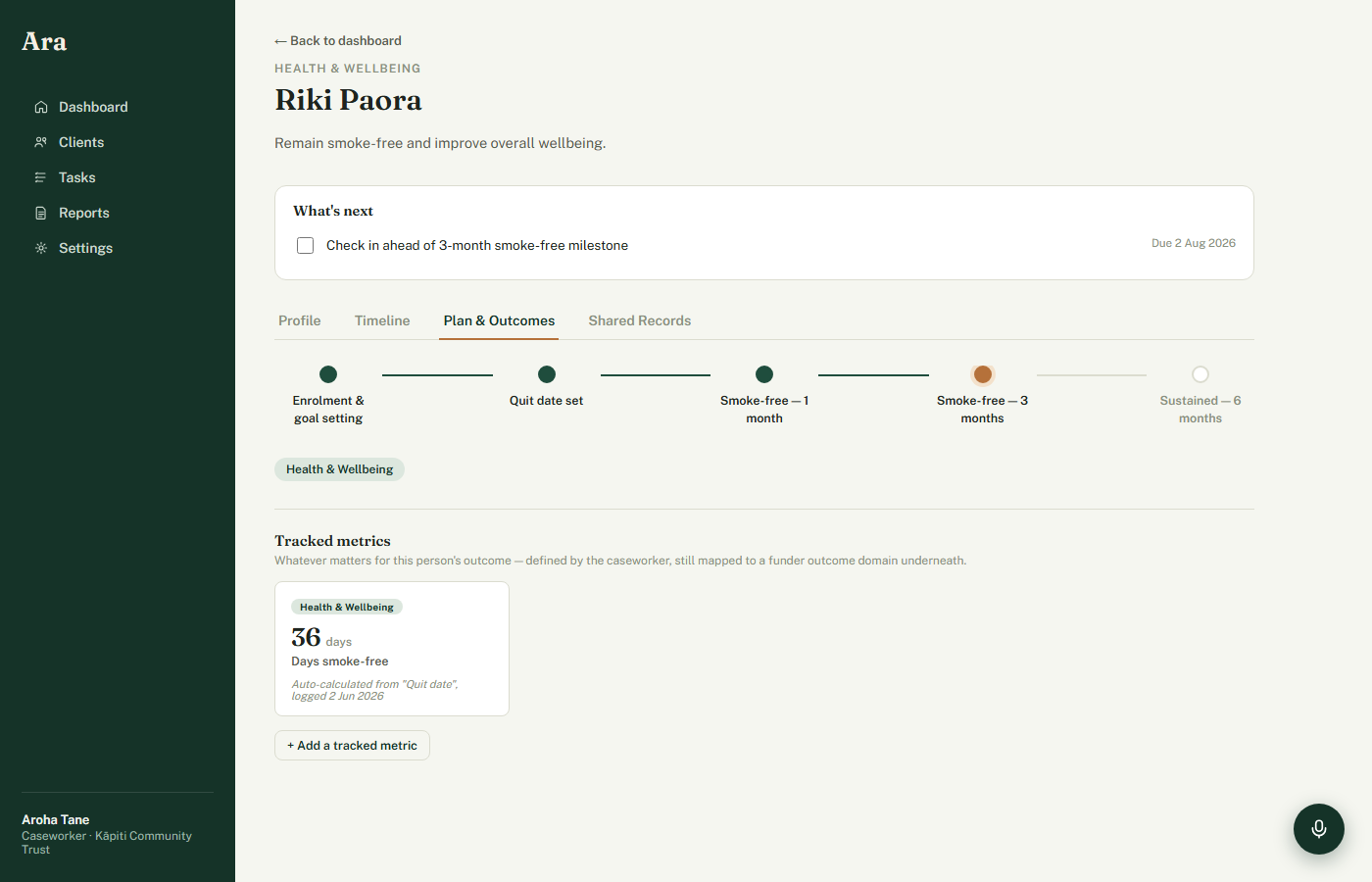
Every case is different. Add a custom field for anything you're tracking — days smoke-free, a savings goal, sessions attended, whatever's real for that person — and it still rolls up cleanly into reporting, because it's tagged to an outcome category underneath.
Board reports. Team updates. Funder and government reporting. All built from the same clean data — nobody's pulling it together from scratch, ever again.
A clear, accurate outcomes summary for board meetings — pulled straight from the work your team is already doing, not assembled the night before.
See caseload, progress, and outstanding tasks at a glance — the same data your team logs every day, just organised for a different audience.
Whatever format they need — a government agency, a philanthropic funder, a council contract — Ara builds the report from the same clean data, on demand.
If someone's been supported elsewhere, their history can travel with them to a new provider — only with their consent, only what they choose to share. Nobody starts from zero with a new worker.
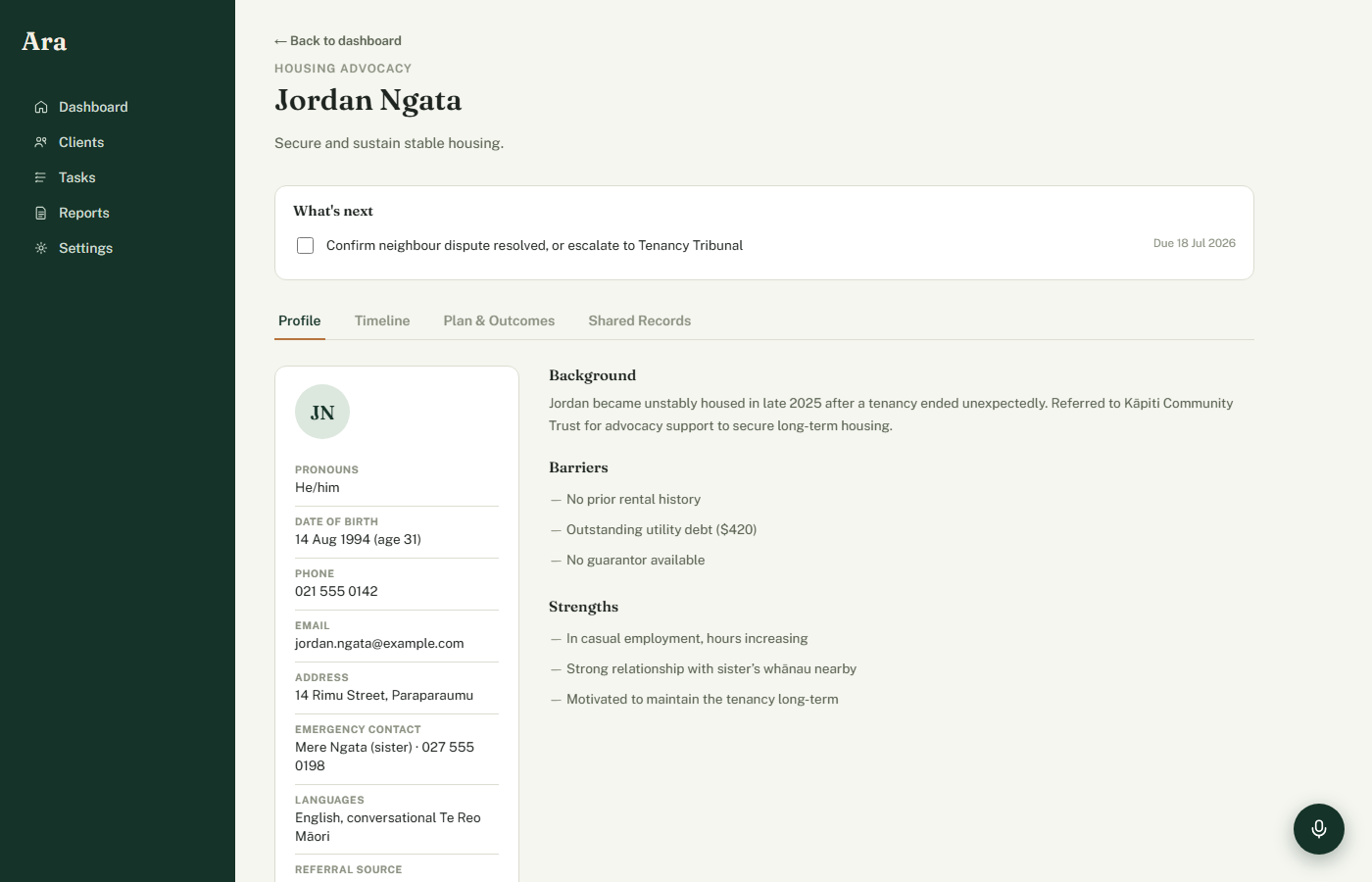
Case profiles in Ara capture strengths alongside barriers, not just a list of deficits — because that's a truer picture of the person your team is supporting.
A person's data is theirs. Your organisation sees what's been shared with you for your work — nothing leaves, and nothing is shared with anyone else, without their say-so.
The people you support can access their own record directly, through Ara's client app — more on that just below.
Ara includes an app for the people your team supports — turning case management from something that happens about someone into something that happens with them.
People can message their caseworker, get reminders, and stay engaged between visits — instead of falling out of contact until the next scheduled check-in.
People can see what's been recorded about them and exactly who it's been shared with — building trust, instead of leaving them in the dark about their own file.
Every share happens through a real, specific choice someone makes in the app — not a blanket form signed once and forgotten.
Bring your team twenty minutes. We'll walk through a case like the ones you handle every day — start to finish, live.
Book a 20-minute walkthroughMost case management software charges per user — a real barrier for organisations that are already stretched. Ara doesn't. There's no tier where privacy or features cost extra.
We generate revenue from de-identified, aggregate outcomes intelligence — never from your organisation's case records, and never without a separate, explicit opt-in.
A person's data belongs to them. Your organisation sees what's been shared with you — nothing more — and nothing leaves without the person's specific say-so.
Yes — permanently, for your organisation, with no per-seat cost and no feature paywall. We're funded through a separate, opt-in aggregate data layer, never through charging the organisations we work with.
The person the data is about. Your organisation can see and use what's been shared with you for your work, but nothing about a person leaves your system, or gets shared with another organisation, without their specific consent.
No. We work alongside your team to map your existing records into Ara's structure at your own pace — you don't need a clean slate to get started, and new work can start being captured properly from day one.
We build report formats around your actual funders — that's part of onboarding, not a limitation you work around. Tell us who you report to, and we'll make sure Ara speaks their format.
Not currently, by design. Ara is built specifically for 1:1 support work — advocacy, casework, mentoring, and similar — where there's an individual plan and an individual outcome to track.
Twenty minutes, no pressure. Tell us a little about your organisation and we'll bring an example that actually looks like your work.
We'll be in touch within a couple of days to find a time that works.